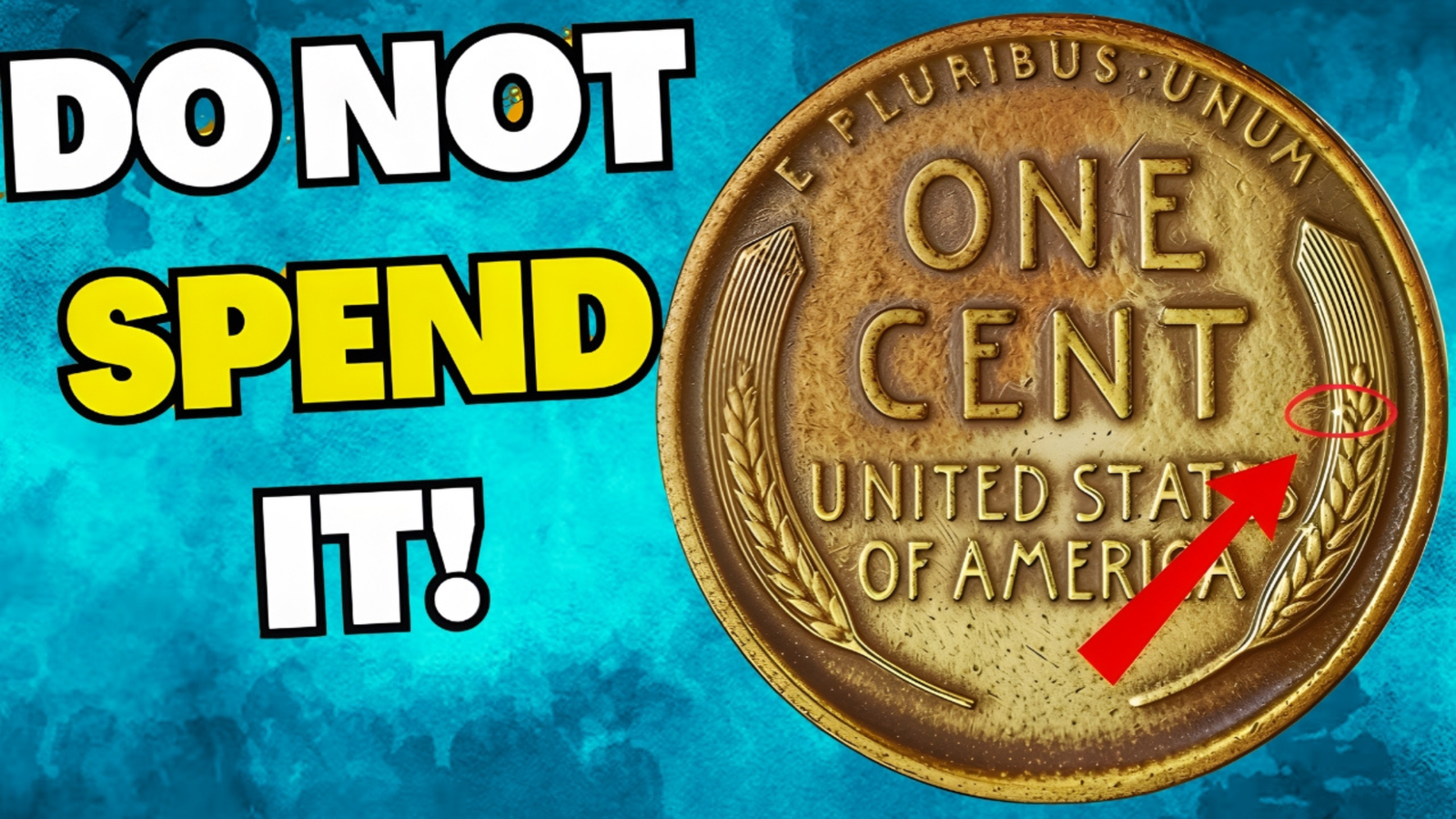
Somewhere in an old jar, bank roll, or even a parking-lot find, one tiny copper mistake is still waiting to turn someone into an instant six-figure winner: the legendary 1943 Bronze Lincoln Cent — the most famous and valuable wheat penny error ever made. When the U.S. Mint switched to zinc-coated steel in 1943 to save copper for the war, a handful of bronze planchets accidentally got struck with Lincoln wheat dies.
Fewer than 20 genuine examples are known today, and every single one is worth a fortune. In 2025, even well-circulated pieces sell for $200,000+, while top-grade beauties routinely cross $1.7 million at auction. Here’s exactly how to spot the real 1943 bronze penny, current values, recent record sales, and why this is the one wheat penny error every American should be checking for right now.
Why the 1943 Bronze Penny Became the Ultimate Wartime Error
In 1943, copper was desperately needed for shell casings, so the Mint switched to steel cents — but a few leftover 1942 bronze blanks got mixed in at Philadelphia (and possibly San Francisco). The result? Perfectly struck Lincoln wheat pennies in gleaming copper instead of dull gray steel. Only 10–20 authentic 1943 bronze cents have ever been confirmed, making this the rarest wheat penny error in existence and the undisputed king of modern U.S. coin mistakes.
Step-by-Step: How to Spot the Real 1943 Bronze Wheat Penny in Seconds
Grab any 1943 penny and run these four instant tests:
- Color & Shine: Must be copper/bronze — not dull gray steel. It should look exactly like a normal 1942 or 1944 penny.
- Weight: Genuine bronze weighs 3.11 grams (steel = 2.7 grams) — use a precise digital scale.
- Magnet Test: Real 1943 bronze does NOT stick to a magnet (steel cents do).
- Date & Details: Clear “1943” with sharp wheat reverse — no signs of alteration or plating.
If it passes all four — stop everything. You just found the 1943 bronze wheat penny error that might make you rich.
Current 2025 Values: From $200,000 to $1.7 Million Overnight
Auction records in the past 12 months are jaw-dropping:
- Very Good–Fine (circulated): $200,000 – $400,000
- Extremely Fine–AU: $500,000 – $800,000
- MS63–MS64 Brown/Red-Brown: $800,000 – $1.2 million
- MS65+ Red (gem): $1.5 million – $1.7 million+
- Record price: PCGS MS64 Brown sold for $1,700,000 in January 2025.
Even the most worn authentic example is worth well over $150,000 — no other circulating wheat penny error comes close.
Where 1943 Bronze Pennies Are Still Being Found in 2025
They still surface — rarely, but dramatically:
- Original 1940s bank rolls and family hoards never searched
- Estate cleanouts (one MS63 discovered in a Massachusetts attic in 2024)
- Wheat cent bulk bags sold on eBay and at coin shops
- Extremely rarely, in circulation (one verified Fine example turned in at a Pennsylvania bank in 2023)
Because they look exactly like normal pre-1943 cents, many have been spent or saved unknowingly for 80 years.
How to Get Your 1943 Bronze Wheat Penny Authenticated and Sold Safely
- Photograph immediately under strong light — never clean it.
- Submit insured overnight to PCGS or NGC with “1943 Bronze” noted (they’ll XRF test the metal for free if it looks real).
- Once slabbed, sell through Heritage Auctions, Stack’s Bowers, or GreatCollections — all have set multiple records for this date.
- Beware fakes — copper-plated steel cents are common; only spectroscopic testing confirms bronze alloy.
Wrapping Up: The One Wheat Penny Error That Might Make You Rich
The 1943 bronze wheat penny error remains the single most valuable mistake that actually still circulates — a wartime accident so rare that every confirmed example makes global headlines. Next time you see a 1943 penny that looks “wrong,” test it with a magnet and a scale. Because somewhere out there, the next $1 million+ 1943 bronze penny is still hiding in plain sight.